
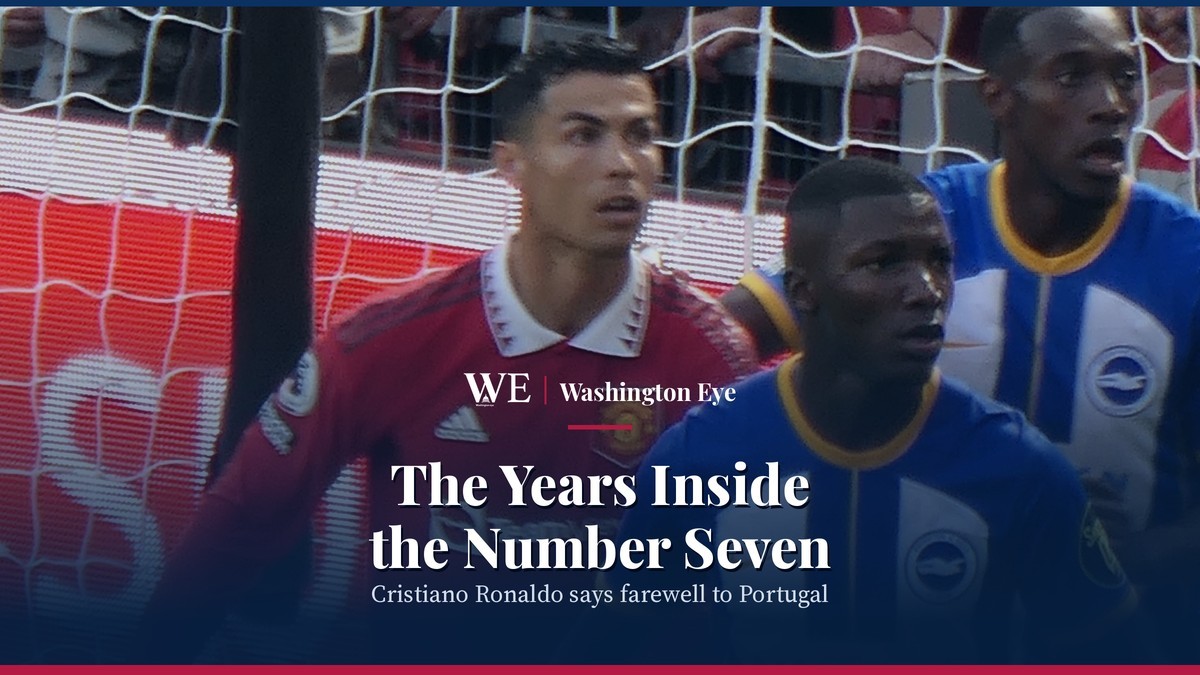

A football shirt can be handed back. The years inside it cannot. For Cristiano Ronaldo, Portugal's number seven had become something larger than a place in a team: a thread running through 23 years of ambition, disappointment and extraordinary achievement. On 5 November, at 41, he announced his retirement from international football in a video posted on social media. The national career is over. The club career is not. That distinction matters, even on a day when the farewell feels bigger than its formal boundaries.
"Today the time has come to pass it on to the future," Ronaldo said of the shirt. The sentence was striking in its simplicity. A player whose career had so often been measured in the language of more, more goals, more appearances, more years, was speaking instead about making room. He leaves Portugal with 146 goals in 234 appearances, both men's international records. Those numbers establish the scale. They cannot quite explain the attachment.
His journey with the senior national side began in August 2003. It ended, on the pitch, in Lisbon on 24 September, in a 1-0 Nations League victory over Wales. Between those dates lies a sporting lifetime: six European Championships, six World Cups, a European title and two Nations League triumphs. A generation of supporters has known Portugal principally with Ronaldo in it. His departure changes not only a team sheet but the familiar shape of watching the country play.
There is a temptation, when a career becomes this large, to make its ending immaculate. Ronaldo's was not. His departure followed a dispute with coach Jorge Jesus over playing time, an unused place on the bench against Norway and his subsequent exit from the national camp after being told he would not start against Denmark. The federation imposed a fine and a 30-day suspension. The closing chapter contained friction, not a carefully arranged final bow.
That belongs in the portrait. To leave it out would turn a tribute into a varnished version of events. Ronaldo had accused Jesus of breaking promises about his role. Jesus left open the possibility of a return. What followed was retirement rather than reconciliation on the field. It is possible to recognise the coach's authority, the player's hurt and the awkwardness of the ending without pretending to know what either man felt in private.
Great sporting careers do not always conclude when their owners have finished wanting them. Selection is a daily decision; legacy is something accumulated over decades. The two eventually pull apart. For Ronaldo, whose international identity had been built around being indispensable, the bench marked a boundary that records could not move. The uncomfortable final weeks do not cancel the previous 23 years. Nor do those years make the discomfort disappear.
His farewell offered a less defensive way of looking back. "I made mistakes; I suffered," he said. He acknowledged defeats and occasions when he could not give Portugal what its people wanted. These were not the words of an uninterrupted victory procession. They allowed space for the other half of a long career: the failures that remain even when a trophy cabinet is full, and the demands that cannot always be met.
Portugal finished runners-up at Euro 2004, early in his international life. Twelve years later, it became European champion. The distance between those milestones is essential to understanding his national story. Success did not arrive as a reward for promise alone. There were tournaments to lose, expectations to carry and seasons to survive before Portugal won its first European title. Longevity gave Ronaldo something that brilliance by itself could not guarantee: another chance.
The 2016 championship became the central national achievement of his career. The inaugural Nations League title followed in 2019, then another in 2025. Together they changed the terms in which Portugal could remember this era. It was no longer only a country producing exceptional footballers and enduring near misses. It had major trophies to place beside the talent. Ronaldo, captain since 2008, had been a defining presence through that change.
Yet the World Cup remained beyond reach. Ronaldo played in six editions and scored in all six, an extraordinary extension of his international relevance. In the 2026 tournament he started every Portugal match before the team lost in the last 16 to eventual champion Spain. Even after so many records, the largest prize was missing. That absence gives his story proportion. A career can be monumental without answering every ambition it creates.
For a global audience, that is part of what makes the farewell recognisable. Football asks its stars to be national symbols and international entertainers at once. Supporters far from Portugal could invest in Ronaldo's pursuit of a title, a goal or another tournament without sharing his passport. But the shirt he discussed in the farewell belonged to a particular country. The worldwide celebrity was returning something intimate: the right to represent home.
The Portuguese Football Federation described its response as one of "deep gratitude and immense admiration". It also promised a tribute that would allow supporters and the country to celebrate him again. There is no need to invent the ceremony before it happens. The promise itself recognises that an announcement and a farewell are not quite the same thing. One closes the formal record. The other gives people somewhere to put their thanks.
The federation said Ronaldo had raised Portugal's profile and inspired generations of young people. Such language can become routine around a departing star, but here the duration gives it weight. Twenty-three years is long enough for children watching a debut to become adults watching a departure. It is long enough for the same player to belong to different chapters of a family's life. Continuity, as much as excellence, creates that kind of sporting affection.
The records will remain the cleanest way to describe his output. The 146 goals represent repeated acts of delivery, not a single brilliant tournament stretched into legend. The 234 appearances speak to something equally demanding: remaining part of the national conversation across changing teams, coaches and expectations. Even so, a statistic is an ending written in digits. It cannot preserve the anticipation before a match or the feeling of seeing a familiar name appear once more.
There is another distinction worth preserving. This is not Ronaldo's retirement from football. He continues with Al-Nassr and, at the time of his international announcement, had 985 career goals as he pursued 1,000. He is expected to finish his club career at the end of the season, but an expectation is not a completed farewell. Portugal's chapter has closed. The final pages of his playing life are still being written.
That unfinished business makes this an unusual moment of leave-taking. The sport does not yet have to surrender him completely, while Portugal must begin imagining competitive nights without him. For the national side, the future is no longer a subject to postpone. Other players will carry the responsibility, absorb the scrutiny and discover that inheriting a shirt is easier than inheriting everything people have attached to it. They need not reproduce his career to honour it.
A beautiful farewell need not erase an untidy ending. It can hold the argument and the achievement together, allowing a great player to remain human rather than turning him into a monument. Ronaldo gave Portugal records, trophies and an exceptional span of service. He also gave its supporters the experience of growing older alongside a player who seemed determined not to stop. Now he has. The number seven goes forward. The years inside it stay with Portugal.